
1371 - Fulcaster

-
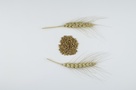
Photo de 1371

Year of use: 1886, a historical variety.
In 1886, a seed wheat grower named Mr. S.M. Schindel from Hagerstown, Maryland bought 6000 bushel of Franklin White Chaff from Mr. Ebersole. Before Schindel sold this seed across the U.S, it was decided that a name change would better reflect its parentage and aid in marketing. Ebersole grew two wheat varieties on his farm, one was Lancaster (Mediterranean), and the other, Fultz (Walsh). Fultz was an improved beardless Lancaster (Mediterranean) wheat discovered in Allensville, PA by Abram Fultz in 1862. it was decided that this wheat should be renamed Fulcaster (Bayles, Clark 1949).
S.M Schindel was responsible for growing, advertising and marketing of Fulcaster across the U.S. and is often mistakenly credited with its creation(ARS). Fulcaster was a widely grown soft red winter wheat and saw soil in 25 different states. In 1919, Fulcaster was grown on 335,200 acres in Pennsylvania and was grown on 2,600,000 acres in the United States. Also in 1919, there were 39 synonyms (growers renamed Fulcaster without selecting for improvements, this was often done to reflect the area it was grown in and a marketing tool for seedsman) (Clark, Barr, Martin). Henry Ebersole would die in 1902 at the age of 78 and never fully see the success of his discovery. Henry is buried in the Chambersburg Mennonite Cemetery just north of Penn Hall. Fulcaster would eventually be replaced by newer, improved varieties and in 1959, only 59,000 acres were planted nationwide. (Jonathon Ott for The Bridge)
Accession

Origine et provenance
Autres numéros
Multiplication et conservation
Évaluation de la culture
Description (blé)
Évaluation de la culture (blé)
Résistance céréales
Qualité boulangère (blé)